
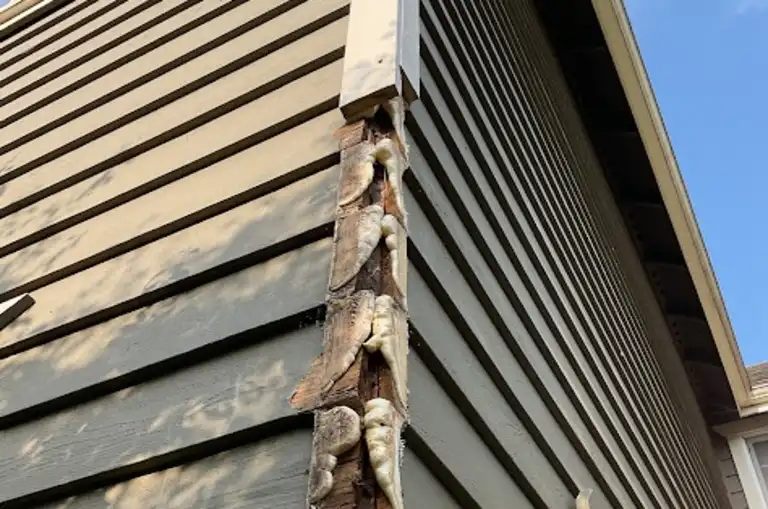
Marysville’s dry summer weather can make gutter problems seem like a low priority. However, dry conditions can actually provide an ideal opportunity to inspect exterior wood for damage caused by previous moisture exposure. Gutters do not need to be actively leaking today to have contributed to wood deterioration. Overflowing gutters, separated seams, loose sections, and poorly directed downspouts can repeatedly expose fascia, soffits, siding, and exterior trim to water during wetter periods.
If those materials now show soft spots, peeling paint, dark discoloration, or warping, wood rot repair may be necessary for homeowners in Marysville. Repairing deteriorated wood during a dry period also creates an opportunity to correct the moisture source before heavier rainfall exposes the area again. The important question is not simply whether your roof leaks. It is whether your gutter system has been controlling water effectively and whether exterior wood has already suffered from repeated moisture exposure.
Why Is Dry Weather a Good Time to Check for Wood Rot?
A dry surface can reveal something that active rainfall sometimes makes harder to distinguish: the evidence left behind by an earlier drainage failure.
Instead of looking only for water that is currently dripping, examine the pattern it previously created. A darkened strip directly beneath a gutter seam may point to recurring leakage at that joint. Peeling paint concentrated behind a sagging section can suggest that runoff has been reaching the fascia. Deterioration near one downspout may indicate that concentrated discharge has repeatedly affected the same area.
Dry conditions also make it easier to compare questionable wood with nearby unaffected material. The important question is not simply, “Is this board wet today?” It is, “What does this area reveal about where water has been traveling?”
That distinction makes a dry-weather inspection more useful than a general visual check before Marysville’s wetter conditions return.
How Can Gutters Cause Wood Rot Without a Roof Leak?
Gutters have one primary job: control water coming off the roof and direct it away from vulnerable areas of the house.
When the system works properly, roof runoff enters the gutter, travels toward the downspout, and is discharged away from the home’s exterior. When something interferes with that process, water can follow unintended paths.
For example, a clogged gutter can overflow over the edge and repeatedly wet the fascia. A loose gutter can allow water to travel behind the system and reach the wood beneath it. A damaged seam can drip onto exterior trim, while an improperly positioned downspout can concentrate water against siding or near other vulnerable materials.
None of these conditions requires a roof leak.
The roof can remain completely watertight while the exterior wood develops moisture damage from an inadequate drainage system.
This distinction is important because homeowners often look for roof leaks when they notice discoloration or deterioration near the upper portion of the home. The actual source may be the gutter system.
How Can You Tell Whether the Gutter Is Really Causing the Wood Damage?
Wood deterioration near a gutter does not automatically mean the gutter caused it. Look at where the damage begins and how the moisture pattern appears. Rot directly beneath a leaking seam, behind a gutter that has pulled away from the fascia, or near a downspout may suggest gutter-related moisture exposure.
However, roof flashing, failed caulking, siding gaps, window openings, or other drainage issues can also direct water toward exterior wood. Check for staining, peeling paint, warped material, or discoloration that follows a specific water path. If the source is not obvious, avoid assuming the gutter is responsible simply because it is nearby.
A professional assessment can help distinguish gutter-related deterioration from other moisture problems and determine whether the damage requires wood rot repair.
How Can Repeated Moisture Exposure Can Lead to Wood Rot?
Exterior wood can handle normal weather exposure when water drains away and the material has an opportunity to dry. Trouble develops when a gutter defect repeatedly sends runoff toward the same edge, joint, fastener location, or unfinished surface.
The first visible change may be cosmetic. Paint begins lifting, caulk separates, or a dark stain appears. Those conditions can expose less-protected portions of the wood to additional moisture. If the material remains sufficiently damp for extended periods, conditions can become favorable for wood-decay fungi and progressive deterioration.
That is why a stain and actual rot should not be treated as the same thing. A stained fascia board may remain structurally sound. Wood that has become soft, brittle, crumbly, deformed, or unable to hold fasteners securely raises a different concern.
When gutter-related deterioration is suspected, identifying how water reached the wood and whether the material has lost integrity provides more useful information than simply confirming that the area was wet at some point.
5 Gutter Problems That Can Contribute to Wood Rot
Not every gutter issue creates the same risk. These five conditions deserve particular attention in Marysville homes.
1. Clogged Gutters and Overflow
Leaves, twigs, moss, and other debris can restrict water movement. During the next substantial rainfall, a clogged gutter may allow water to spill over the front or back edge.
If the overflow reaches fascia, soffits, siding, or trim repeatedly, those materials can experience prolonged moisture exposure.
2. Leaking or Separated Gutter Seams
Gutter joints can deteriorate over time. When a seam separates or develops a leak, water may drip directly onto nearby exterior wood.
The problem can remain difficult to notice during dry weather because the leak only becomes obvious when water is flowing through the gutter.
3. Gutters Pulling Away From the Fascia
A gutter that has pulled away from the roofline can create a space through which water reaches the fascia behind it.
This problem deserves attention because the damaged area may be partially concealed by the gutter itself. What appears to be a minor separation from the ground can potentially expose the wood behind the system to repeated moisture.
4. Poorly Directed Downspouts
Downspouts concentrate water into a smaller area. If the discharge point sends water against siding, trim, or another wood component, that concentrated flow can contribute to water damage to wood.
Downspouts should direct water away from vulnerable exterior surfaces rather than allowing runoff to collect against the home.
5. Water Trapped Around Exterior Wood
Some moisture problems are less obvious than an overflowing gutter. Water can collect around corners, joints, trim transitions, and areas behind exterior components where airflow and drainage are limited.
These conditions can create hidden water damage that may not become obvious until the wood begins to soften, discolor, warp, or deteriorate.
What Are the Signs of Gutter-Related Wood Rot?
The location and pattern of deterioration can provide as much information as the symptom itself. A random patch of peeling paint may have several explanations. Peeling concentrated directly behind a gutter joint, beneath a low section, or beside a downspout connection creates a stronger reason to investigate the drainage system.
Look for:
- Soft or spongy areas along the fascia
- Paint failure concentrated below or behind gutter sections
- Dark streaks originating near seams or corners
- Fascia that appears distorted around gutter fasteners
- Crumbling or missing wood fibers
- Soffit deterioration directly beneath a problem area
- Gaps developing between the gutter and fascia
- Trim deterioration along a repeated runoff path
- Gutter fasteners that appear loose or no longer sit firmly
- Adjacent sections showing progressively less damage farther from the suspected water source
The pattern matters. Surface staining can indicate previous moisture without confirming decay, while softness, material loss, deformation, or weakened attachment points suggest that the wood itself may have deteriorated.
DIY vs. Professional: What Can Homeowners Safely Check?
Homeowners can perform a basic visual inspection of gutters and exterior wood, especially during Marysville’s dry season. However, a visual check should help identify potential problems, not determine the full extent of wood deterioration.
What Can a Homeowner Safely Observe?
A homeowner can generally check for visible conditions such as:
- Gutters that are sagging, pulling away from the fascia, or visibly damaged
- Debris blocking obvious portions of the gutter
- Separated gutter seams or visible gaps
- Downspouts that discharge water against siding or near the foundation
- Peeling paint, dark discoloration, or staining on nearby wood
- Visible cracks, warping, or gaps around exterior trim
- Areas where the wood looks noticeably different from surrounding material
These observations can help you identify where further attention may be appropriate. You can also photograph questionable areas and monitor whether the condition changes after rainfall.
Homeowners should avoid assuming that dry or painted-over wood is structurally sound. Surface appearance does not always reveal what is happening beneath the paint, behind the gutter, or inside a deteriorated section.
What Requires Professional Assessment?
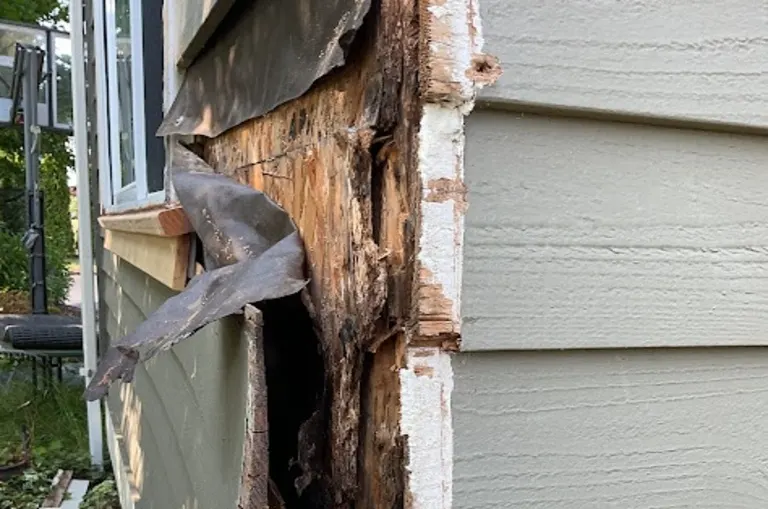
Professional evaluation becomes more important when you notice soft, spongy, crumbly, or structurally weakened wood. These conditions can indicate deterioration that extends beyond what is visible from the exterior.
A professional can assess questions that are difficult to answer through a basic visual inspection, such as:
- How far the deterioration extends beyond the visible damage
- Whether the fascia, soffit, siding, or trim has lost structural integrity
- Whether gutter fasteners are still securely supported by the underlying wood
- Whether moisture has affected concealed portions of the assembly
- Whether the damage is limited to one section or extends into adjacent materials
- Whether the gutter system or another drainage problem is contributing to continued moisture exposure
- Whether damaged material should be repaired, reinforced, or replaced
This distinction matters because wood rot repairis not simply a matter of replacing a board that looks damaged. If deteriorated wood remains behind a gutter or around a connection point, the repair may not address the full problem.
When Should You Stop the DIY Inspection?
If the wood feels unusually soft, breaks apart easily, has visible material loss, or appears unable to securely hold gutter fasteners, avoid probing or dismantling the area yourself. Removing attached components can expose additional damage or create a larger opening for moisture.
Likewise, if you cannot determine whether discoloration represents staining or actual deterioration, professional assessment can provide a clearer answer.
The goal of a homeowner inspection is to spot warning signs and identify areas that deserve attention. On the other hand, a professional assessment determines the extent of the damage, identifies contributing moisture sources, and establishes an appropriate repair approach.
Why Fixing the Gutter May Not Be Enough?
Correcting the drainage problem is essential, but it may not restore wood that has already deteriorated.
Consider a fascia board that has been exposed to repeated gutter overflow. Replacing or correcting the gutter can prevent additional moisture exposure, but damaged sections of fascia may still need to be removed and replaced.
A professionalwood rot repair process may include:
- Identifying the likely source of moisture.
- Examining the affected wood and surrounding areas.
- Determining the extent of deterioration.
- Removing compromised material.
- Replacing damaged fascia, soffits, siding, trim, or other components when necessary.
- Reinforcing affected areas where appropriate.
- Sealing and priming repaired surfaces.
- Addressing gutter, downspout, caulking, or other moisture-related problems contributing to the damage.
This approach is important because covering deteriorated wood without addressing the underlying moisture source can allow the problem to return.
For Marysville homeowners seeking wood rot repair, the objective should therefore be more than replacing whatever damaged board is easiest to see. The repair should address both the deterioration and the conditions that allowed it to develop.
How Homeowners Can Use the Dry Season for Prevention
Dry conditions offer a useful maintenance window. Rather than waiting for the next major rainfall to reveal a gutter problem, homeowners can inspect and address vulnerable areas now.
Consider these preventive steps:
Inspect the Fascia Behind the Gutters
Look for discoloration, soft spots, peeling paint, or visible deterioration. Pay particular attention to areas where the gutter appears loose or separated.
Check Gutter Seams and Connections
Inspect joints for cracking, separation, or evidence of previous leakage. Problems that are easy to see while the system is dry may become more difficult to diagnose once water is actively flowing.
Examine Downspout Discharge Points
Make sure downspouts direct water away from siding, trim, and other vulnerable areas. Also check whether water appears to collect near the home.
Maintain Exterior Protection
Damaged paint, deteriorated caulking, and exposed wood can create additional pathways for moisture. Repairing these protective surfaces can help reduce future moisture intrusion.
Address Existing Damage Before the Next Wet Period
If exterior wood already feels soft or shows signs of deterioration, do not assume that dry weather means the problem has resolved. The surface may be dry while the underlying material remains compromised.
Frequently Asked Questions
1. Can wood rot continue to be a problem during dry weather?
Yes. Dry conditions can stop new moisture from reaching the affected area temporarily, but they do not reverse wood that has already deteriorated. Existing damage should still be evaluated and repaired when necessary.
2. Can a gutter cause fascia rot without damaging the roof?
Yes. Fascia can be exposed to water from overflowing gutters, leaking seams, or gaps behind loose gutter sections even when the roof covering remains intact and watertight..
3. Should I replace the gutter if I discover wood rot behind it?
Not necessarily. The appropriate solution depends on the condition of the gutter, the extent of the wood deterioration, and the underlying drainage issue. Both the moisture source and damaged wood should be evaluated before deciding what needs replacement.
4. How can I tell if my gutter is causing wood rot?
Look for rot, staining, or peeling paint directly below gutter seams, loose sections, or downspouts. However, other moisture sources can cause similar damage, so the pattern should be evaluated carefully.
5. When should I call a professional for wood rot repair in Marysville?
Call a professional when wood feels soft, crumbly, or structurally weak, or when damage appears to extend behind the gutter. A professional can identify the extent of the damage and its likely moisture source.
Address Gutter-Related Wood Damage Before the Next Wet Period
Marysville’s dry conditions should not make exterior wood problems easier to ignore. They provide an opportunity to find them.
If your gutters have previously overflowed, leaked, separated from the fascia, or directed water against your home’s exterior, inspect the surrounding wood now. Soft fascia, persistent discoloration, peeling paint, warped trim, and other signs of deterioration can indicate that moisture has already affected the material.
One Call Home Repair can help identify deteriorated wood, determine the extent of the problem, remove damaged material, and restore affected exterior components while addressing conditions that can contribute to recurring moisture damage.
Do not wait for the next major rainfall to reveal a problem you can address now. Contact One Call Home Repair at (425) 551-0353 to schedule your free inspection and estimate for professional wood rot repair in Marysville. Taking action during dry weather can give you an opportunity to address vulnerable areas before additional moisture exposure makes the repair more extensive.