
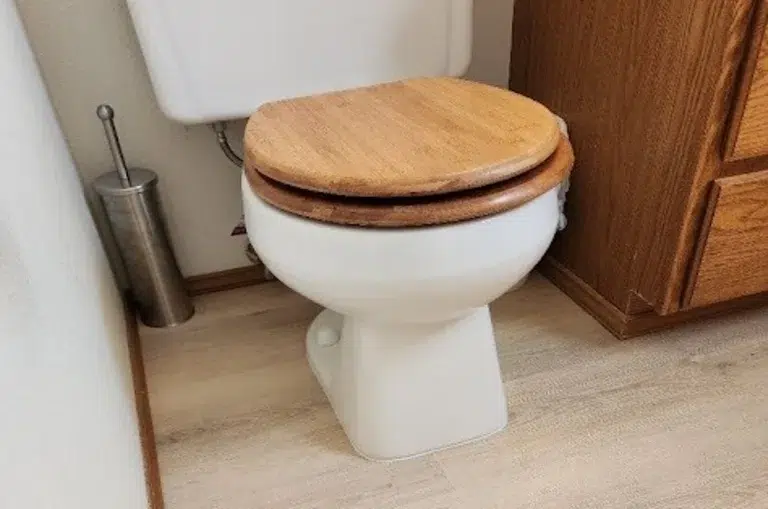
A soft spot around the toilet can turn an ordinary morning into an unexpected home-repair concern. You step into your bathroom, feel the floor give slightly under your foot, and immediately look for a leak. The toilet base is dry. The supply line shows no dripping, and there is no obvious water stain nearby.
In a Marysville home, where bathrooms already manage frequent moisture from showers, condensation, and everyday use, that unexplained softness deserves a closer look. The problem may actually be developing underneath the finished flooring.
When homeowners begin searching for bathroom repair in Marysville, the important question is not simply whether the toilet is leaking. It is finding out what is happening underneath the surface before a small problem becomes a larger repair.
Why Can a Toilet Damage the Floor Without Leaving Visible Water?
A toilet can contribute to hidden floor damage even when there is no visible water around its base. The plumbing connections and sealing components are located beneath or immediately around the fixture, so a small leak may enter the flooring system rather than spread across the bathroom surface.
For example, a compromised toilet seal may allow water to escape only when the toilet is flushed. Instead of producing a puddle, that water can travel into the area around the toilet flange and gradually affect the materials underneath the finished floor.
The same thing can happen with a damaged flange, loose toilet, or plumbing connection. Because the amount of water may be small and intermittent, homeowners may notice a change in the floor before they ever see obvious moisture.
That is why a bathroom floor should not be evaluated by appearance alone. Softness, movement, odors, gaps, and changes around the toilet can all provide clues about what is happening underneath.
What Is Actually Making the Floor Feel Soft?
Before determining the cause, it helps to understand what is underneath a typical bathroom floor.
A bathroom floor may contain several layers:
Finished flooring: This is the visible surface, such as vinyl, luxury vinyl plank, tile, or another flooring material.
Underlayment: Depending on the flooring system, an intermediate layer may sit beneath the finished surface.
Subfloor: Plywood or oriented strand board, commonly called OSB, provides much of the floor’s structural support.
Floor framing: Joists or other structural components support the subfloor from underneath.
A soft spot does not automatically mean every layer has failed. The finished flooring could be flexing because of a problem underneath, the underlayment could have deteriorated, or the structural subfloor could have been weakened by moisture.
This distinction matters because replacing visible flooring will not correct a damaged subfloor. The underlying material needs to be assessed before deciding how extensive the repair should be.
What Causes a Soft Floor Around a Toilet?
Several problems can produce similar symptoms. A proper assessment should consider the toilet, its connections, the flooring system, and potential moisture sources rather than assuming one component is responsible.
1. A Failed Wax Ring or Toilet Seal
The seal between the toilet and the drain connection helps prevent wastewater from escaping beneath the fixture. A traditional wax ring is one common type of toilet seal, although other approved sealing systems are also available.
Over time, the seal can lose its ability to maintain a watertight connection. Toilet movement, improper installation, an uneven supporting surface, or flange problems can contribute to seal failure.
A leak from this area may occur primarily during flushing. That means there may be little or no water visible around the toilet during normal use.
Repeated exposure can eventually affect the underlayment or subfloor. If the wood-based material begins absorbing moisture and losing strength, the floor may start to feel spongy or unstable.
Replacing the seal may stop the leak, but it does not automatically restore damaged flooring or subfloor material.
2. A Loose or Damaged Toilet Flange
The toilet flange connects the toilet to the drain system and provides an important mounting point for the fixture. If the flange is cracked, corroded, loose, improperly positioned, or no longer securely supported, the toilet may move when someone sits down or shifts their weight.
That movement can create a cycle of problems.
Weak support → toilet movement → compromised seal → hidden moisture → additional floor damage
A damaged flange can therefore be both a symptom of an underlying floor problem and a contributor to additional damage.
Simply tightening the toilet bolts may not solve the issue. Excessive tightening can also damage the toilet itself. The flange and the material supporting it should be evaluated when a toilet continues to move.
3. A Rocking Toilet May Be a Warning Sign
A toilet should sit securely on a stable surface. If it rocks from side to side, the reason may not be as simple as loose hardware.
Possible causes include:
- An uneven finished floor
- A damaged subfloor
- A flange problem
- Loose mounting hardware
- A deteriorated seal
- Loss of support beneath the toilet
A rocking toilet deserves attention because movement places additional stress on the connection between the toilet, seal, flange, and floor.
If the toilet has gradually become less stable at the same time the floor has become soft, the two problems may be related.
4. Previous Water Damage May Have Weakened the Subfloor
Not every soft floor indicates an active leak.
A toilet may have leaked months or years earlier, and the plumbing problem may already have been corrected. However, the affected subfloor may have been weakened during the period when moisture was present.
Plywood and OSB can swell, deteriorate, or lose structural integrity after prolonged moisture exposure. Drying the area stops the moisture but does not necessarily restore damaged wood to its original condition.
This is why replacing a wax ring alone may not resolve a soft floor.
If the underlying material has deteriorated, the repair may involve removing the toilet, opening the affected flooring area, assessing the subfloor, and replacing material that can no longer provide adequate support.
5. Moisture May Be Trapped Beneath the Finished Flooring
Bathrooms have several potential moisture sources besides the toilet.
Water can enter beneath flooring through:
- Failed caulk around wet areas
- Tub or shower leakage
- Plumbing connections
- A leaking supply line or shutoff valve
- Water repeatedly reaching flooring during bathing
- Damage around flooring seams or transitions
Depending on the flooring system, moisture can remain concealed beneath the visible surface.
This explains why a homeowner may have moisture under bathroom flooring without seeing standing water.
The location of the soft spot can provide a useful clue, but it does not necessarily identify the source by itself.
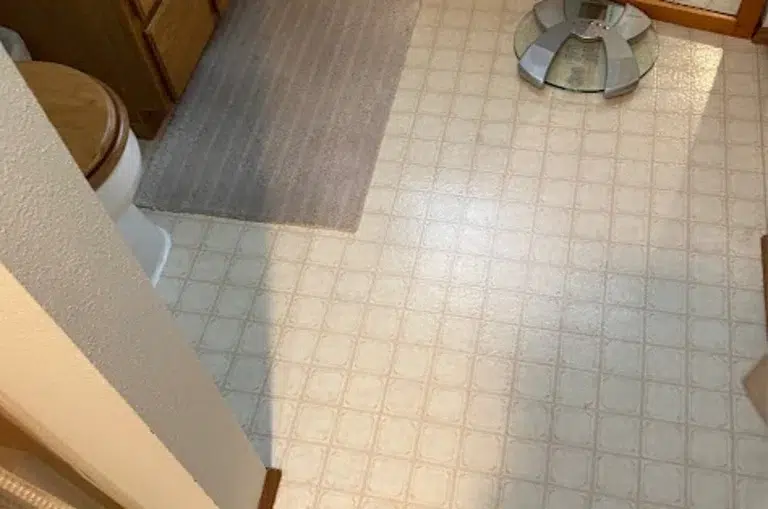
What Are the Signs of a Damaged Bathroom Subfloor?
A soft spot is one warning sign, but it is not the only one.
Look for other changes around the toilet and nearby flooring, including:
- Flooring that flexes or sinks under normal foot pressure
- A toilet that rocks or shifts
- Cracks or separation in tile or flooring
- Gaps developing around the toilet base
- Discoloration or staining
- A persistent musty smell
- Flooring that feels different from the surrounding area
- Repeated moisture around plumbing connections
- A toilet that no longer appears to sit level
- Softness that gradually spreads beyond the original area
These symptoms do not prove that the subfloor is damaged. They indicate that the area deserves closer evaluation.
How Can a Hidden Bathroom Leak Be Found?
When there is no visible water, identifying the source requires looking beyond the finished floor.
A proper assessment may involve examining the toilet and its mounting points, checking accessible plumbing connections, evaluating the flange, looking for signs of previous moisture exposure, and determining whether the softness extends beyond the visible flooring.
The repair professional may also need to determine whether the problem is limited to the finished flooring or has reached the underlayment or structural subfloor.
The goal is to answer two separate questions:
Where did the moisture come from?
What materials have been affected?
Answering only the first question can leave damaged material in place. Answering only the second may result in repairing the floor without correcting the source.
Both need to be addressed for a lasting repair.
When Does a Soft Bathroom Floor Require Repair?
The severity of the problem depends on which materials have been affected and how much structural strength they have lost.
If the issue is limited to a loose flooring material or another superficial problem, the repair may be relatively localized.
However, if moisture has weakened the subfloor, the repair may require more work. Depending on the condition, the process can involve:
- Removing the toilet when necessary
- Identifying and correcting the moisture source
- Inspecting the toilet flange and surrounding area
- Removing affected flooring
- Assessing the underlayment and subfloor
- Removing deteriorated material
- Installing appropriate replacement material
- Restoring the finished flooring
- Reinstalling and properly securing the toilet
The repair area should be based on the actual extent of deterioration rather than an arbitrary patch size.
If floor joists or other structural components appear to be affected, the situation requires additional attention because the issue may extend beyond a localized bathroom floor repair.
What Should You Avoid Doing When the Floor Feels Soft?
A soft floor can tempt homeowners to try a quick cosmetic solution. Unfortunately, some common approaches can conceal the problem without fixing it.
Avoid:
- Repeatedly bouncing on the floor to test how soft it is
- Simply applying caulk around the toilet
- Assuming a dry toilet base rules out a hidden leak
- Installing new flooring over weakened material
- Tightening toilet bolts excessively
- Replacing the visible flooring before identifying the moisture source
- Assuming every soft spot requires only a new wax ring
Caulk cannot repair a damaged subfloor. New flooring cannot restore deteriorated structural material. And a replacement toilet seal cannot correct a flange or floor-support problem.
The first priority should be determining why the floor became soft and which layers have been affected.
Why Should Marysville Homeowners Address a Soft Bathroom Floor Early?
For homeowners in Marysville and throughout Snohomish County, bathrooms are regularly exposed to moisture from showers, baths, plumbing fixtures, condensation, and everyday use. Local climate conditions do not cause a toilet to leak, but they reinforce the importance of controlling moisture and addressing water intrusion promptly.
A small hidden leak can remain unnoticed because the visible floor may continue looking normal.
The concern is what happens underneath.
Continued moisture exposure can cause deterioration to progress, while repeated movement from a poorly supported toilet can place additional stress on the seal and flange.
Evaluating your bathroom problems early can help determine whether the problem is limited to a small area or whether the damage extends into the subfloor.
That distinction can make a significant difference in the scope of bathroom repair in Marysville.
Frequently Asked Questions
Can a toilet leak underneath the floor without showing water around the base?
Yes. A toilet can leak beneath the fixture, particularly during flushing, without producing a visible puddle. Water may enter the area around the flange and become absorbed by flooring or subfloor materials.
Does a soft floor around the toilet always mean the subfloor is rotten?
No. Softness can result from several conditions, including damaged flooring, deteriorated underlayment, previous water exposure, or a weakened subfloor. An inspection is needed to determine which layer is affected.
Can you replace only the damaged subfloor around a toilet?
Sometimes. If the deterioration is localized and the surrounding material remains structurally sound, a localized repair may be possible. More extensive damage may require a larger section to be removed and rebuilt.
Why does my toilet rock when the floor around it feels soft?
The floor may have lost some of its supporting strength, or the toilet flange, mounting hardware, or finished flooring may have a problem. Because toilet movement can contribute to seal failure, both the movement and the floor should be evaluated.
Can a toilet leak without leaving a puddle?
Yes. A small or intermittent leak can enter the floor assembly without spreading across the visible surface. This is one reason a soft floor can sometimes be an earlier warning sign than visible water.
Should I install new bathroom flooring over a slightly soft area?
No. New flooring can hide the symptom while leaving the underlying problem unresolved. The source of moisture and condition of the supporting material should be determined before new flooring is installed.
How do you know whether a soft spot is caused by the toilet or another leak?
The location of the softness can provide clues, but it does not always identify the source. The toilet, flange, supply connections, nearby plumbing, wet areas, flooring, and subfloor may all need to be evaluated.
Don’t Let a Soft Bathroom Floor Become a Bigger Repair
A bathroom floor that feels slightly soft today may be warning you about a problem beneath the surface. The absence of visible water does not rule out a failed toilet seal, damaged flange, previous water damage, hidden plumbing leak, or weakened subfloor.
If you notice softness, movement, sinking, odors, or changes in how your toilet sits, avoid covering the problem with new flooring or a temporary cosmetic fix. Finding the source early can help prevent additional deterioration and clarify whether the repair involves the flooring, subfloor, toilet connection, or another part of the bathroom.
One Call Home Repair can evaluate the affected area and help determine the appropriate repair for your bathroom. If your floor around the toilet no longer feels solid, addressing the issue now can help protect the surrounding materials and restore a stable, functional bathroom floor. Call us today at (425) 551-0353